Stones That Waited For Me
A morning at the Shore Temple in Mahabalipuram: sea wind, granite softened by thirteen centuries of salt, and a quiet lesson in patience.

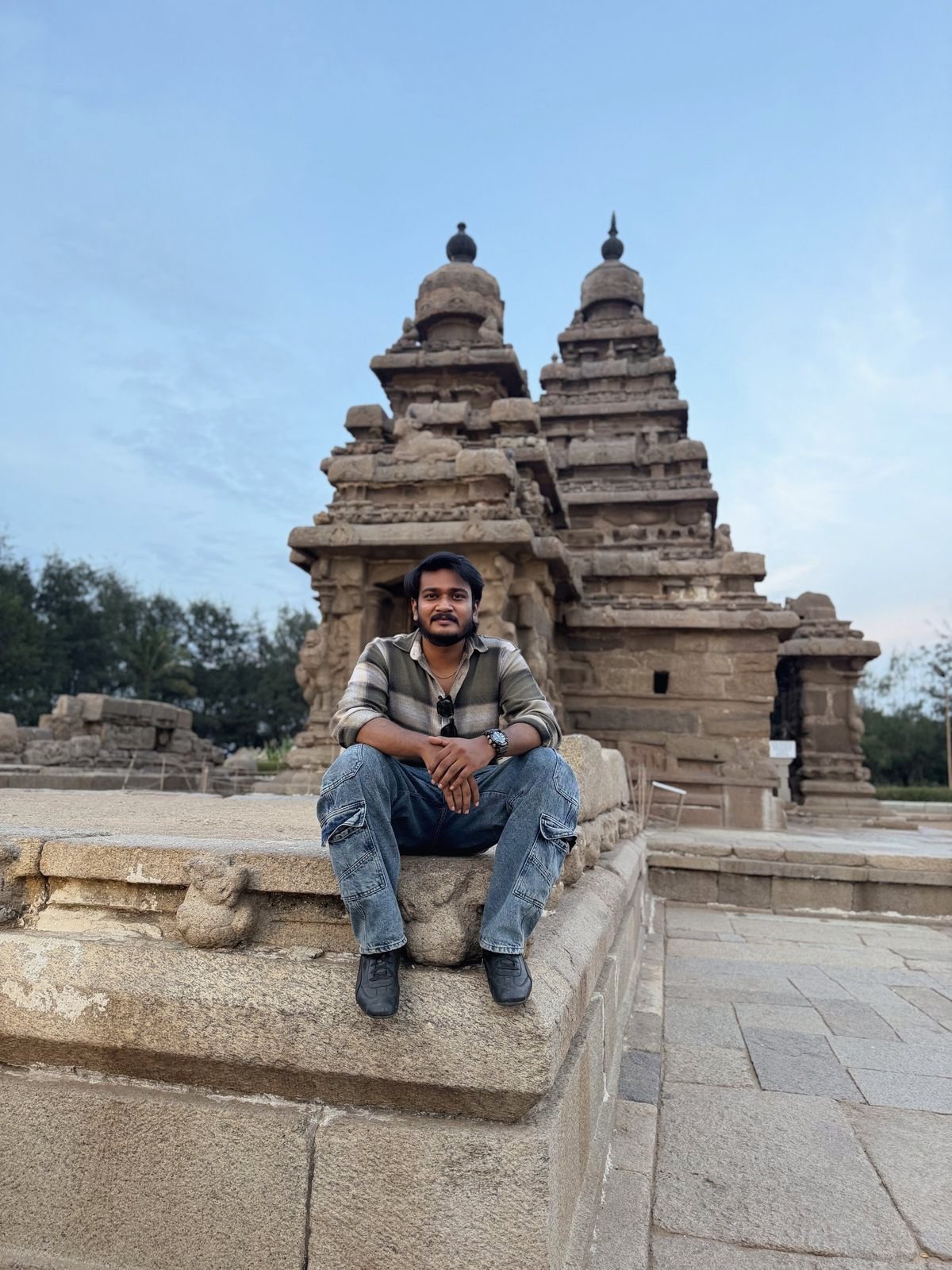
The East Coast Road wakes up slowly. Leave Chennai early enough and you get it almost to yourself: casuarina trees on one side, flashes of sea on the other, tea stalls lifting their shutters one by one. By the time I reached Mahabalipuram, the sky had settled into that soft, washed-out blue you only get near the water.
I'd seen the Shore Temple in textbooks and on postcards for as long as I can remember. Seeing it in person was different. It doesn't feel like a monument. It feels like it's listening.
Built to face the sea
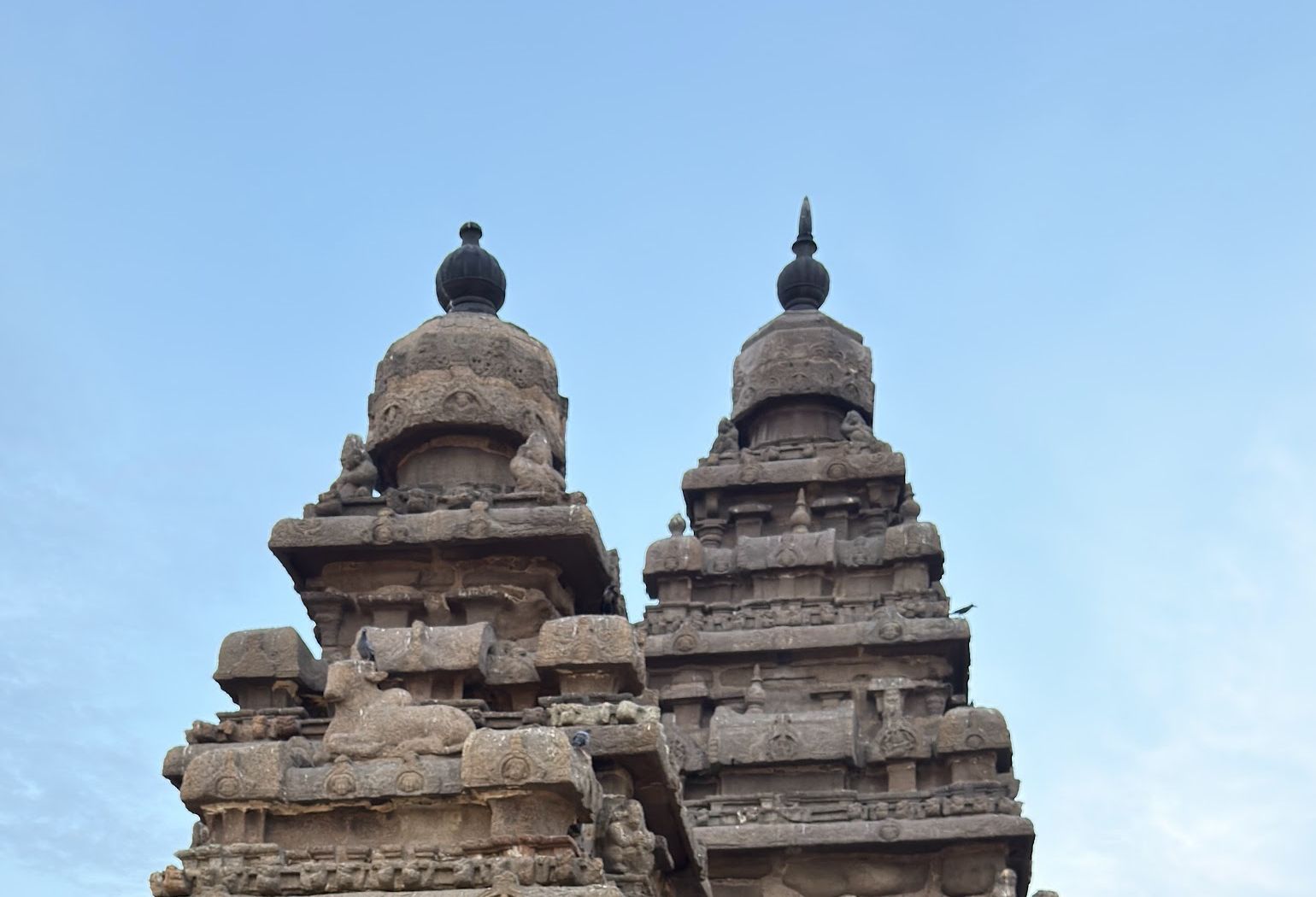
The temple was built in the early 700s, in the time of the Pallava kings. Most of the famous monuments around it are carved straight out of the rock. This one is different: it was built block by block, out of granite, which makes it one of the oldest stone temples of its kind in South India.
And it was built right at the edge of the Bay of Bengal. For around thirteen hundred years it has faced the sea through monsoons, cyclones, salt wind and changing tides. Kingdoms came and went. The coastline moved. The temple kept looking out at the water, like someone waiting at a window for a friend who's always just about to arrive.
What salt does to stone
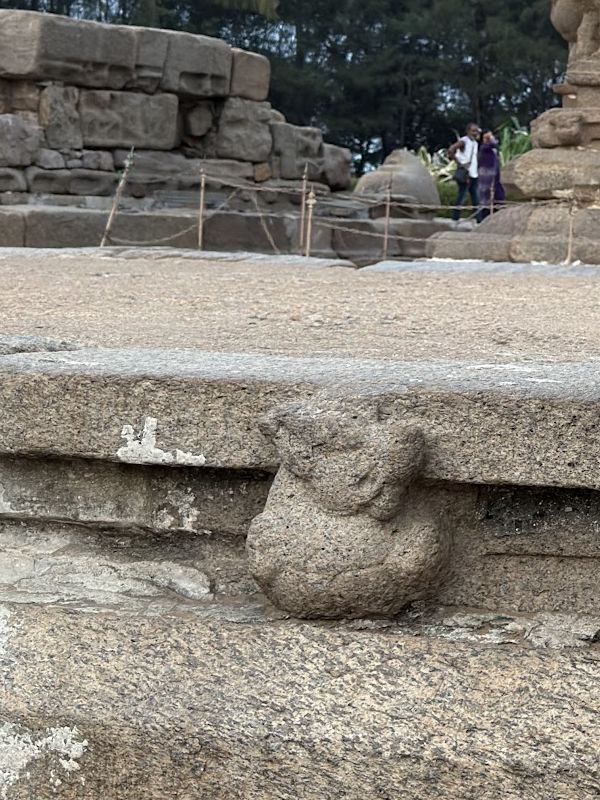
Up close, the carvings don't have sharp edges any more. The salt in the sea air has been working on them for centuries, rounding every corner and softening every face. Along the low walls, small stone figures have worn down into gentle, rounded shapes. You can still tell someone carved them with care. You just can't always tell what they were.
I expected that to feel a little sad. It didn't. It felt honest. The stone isn't pretending nothing has happened to it. It wears its years in the open, and it's still beautiful.
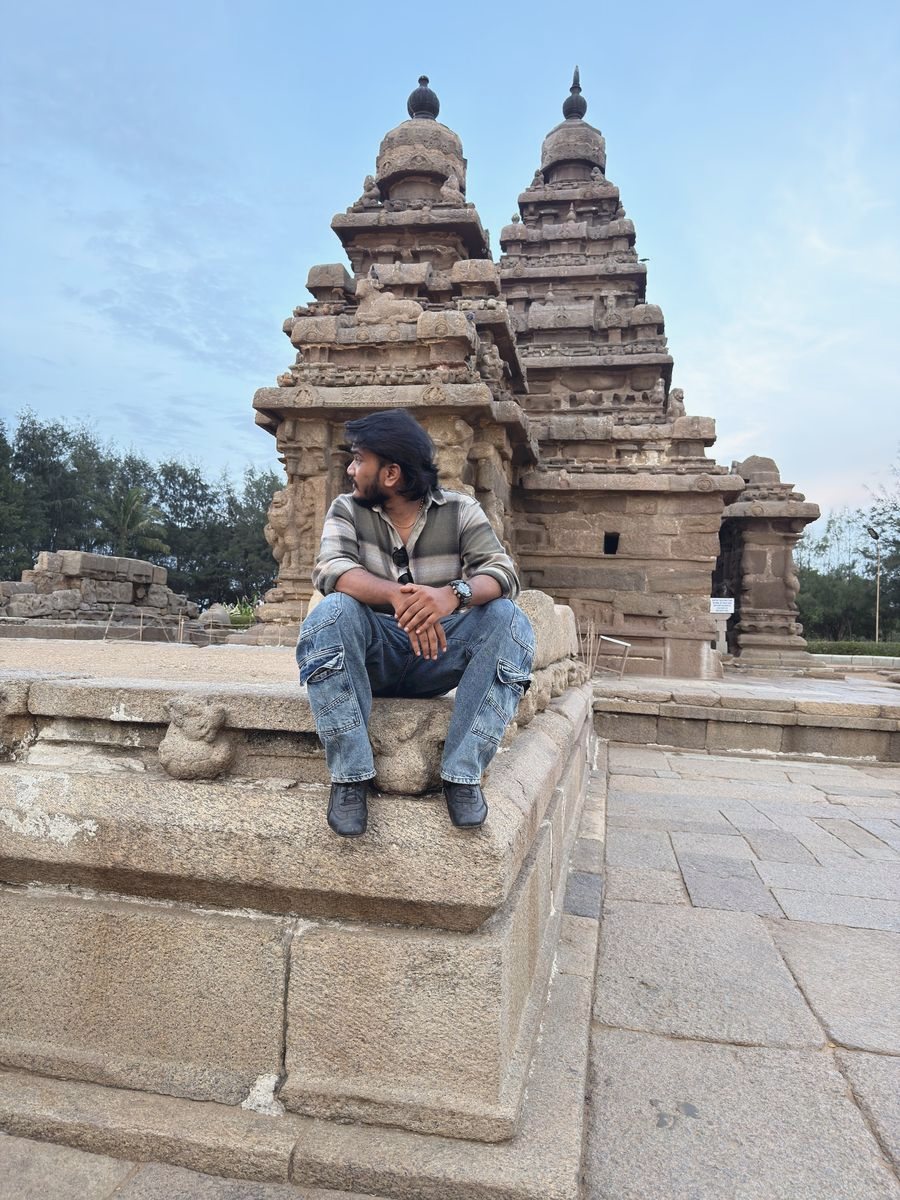
The stone isn't pretending nothing has happened to it. It wears its years in the open, and it's still beautiful.
Sitting with it
I found a spot on the old wall and just sat for a while. No plan, no shot list. The breeze came in steadily from the water. People wandered past in small groups, kids running ahead, parents calling them back.
I think about patience a lot, probably because it doesn't come naturally to me. I want the song finished tonight, the edit perfect by morning, the results by next month. The temple runs on a different clock. It was built by people who knew they would never see it grow old. They made it carefully anyway.
Training taught me the same lesson from the other side. Muscles don't grow on my schedule. Neither do skills, songs or friendships. You show up, you do the small work, and the change arrives quietly, long after you've stopped checking for it. Sitting on that wall, beside stones that have been patient for thirteen centuries, my own impatience felt a little silly. In a good way.
That's the thought I took home. Make things carefully, even the ones you won't see the end of. Some of the best work is meant to outlast the hands that made it.
If you go
Go early, before the sun gets strong. Walk the whole compound slowly, then sit somewhere you can feel the sea breeze. Keep your phone in your pocket for ten minutes. The photos can wait. So can the temple. It has been waiting a very long time.
Little things I noticed
- The granite changes colour when a cloud passes, from grey to gold and back.
- The breeze off the sea never really stops. It just keeps changing its mind about direction.
- Even the most worn carving still has one sharp little edge somewhere, if you look.
- Nobody walks fast here. Even the tour groups slow down.