What a Small Book Taught Me
A small black book called Steal Like an Artist is the reason I started sharing what I make. This is what it taught me, and what I still carry from it.

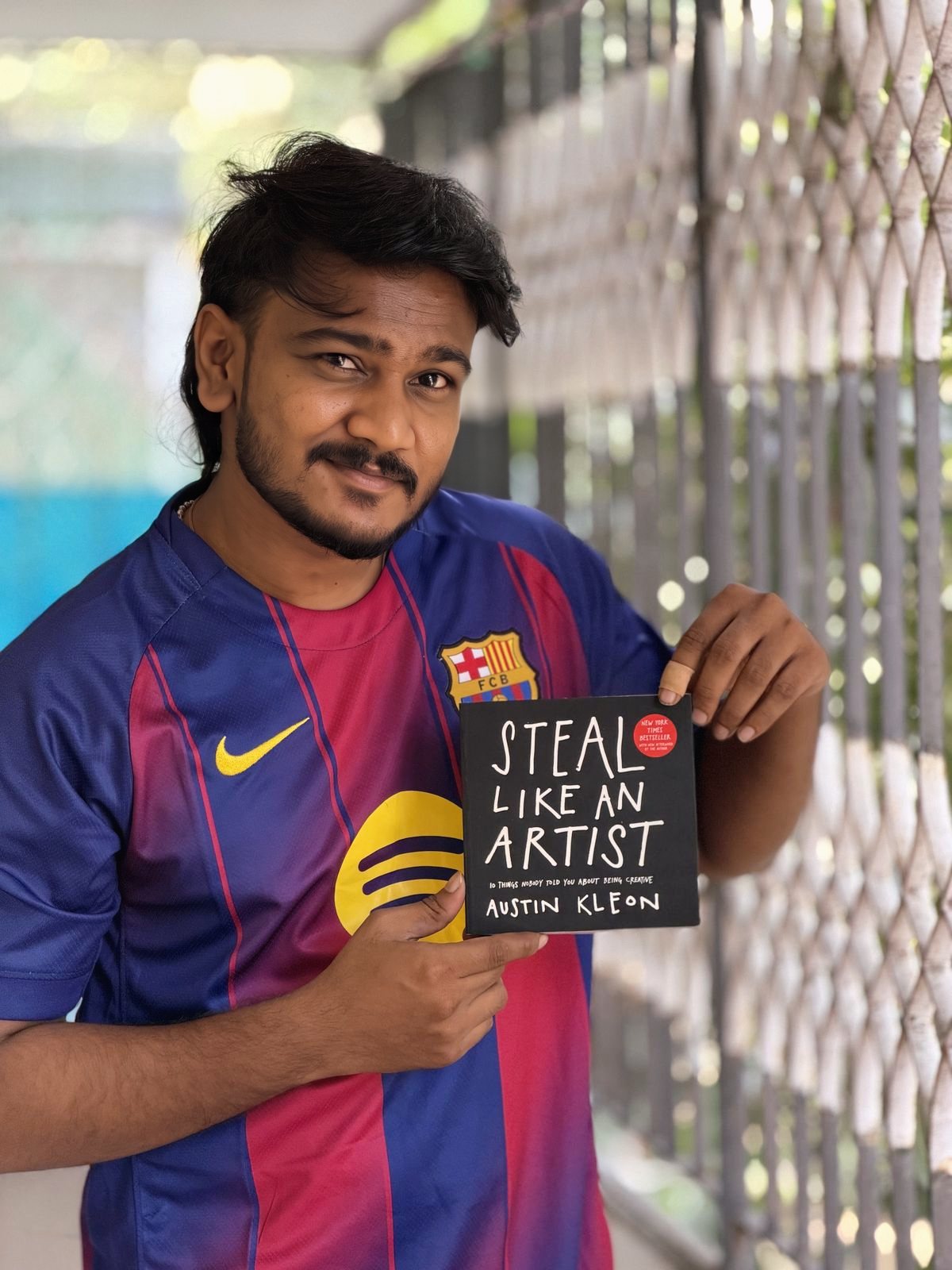
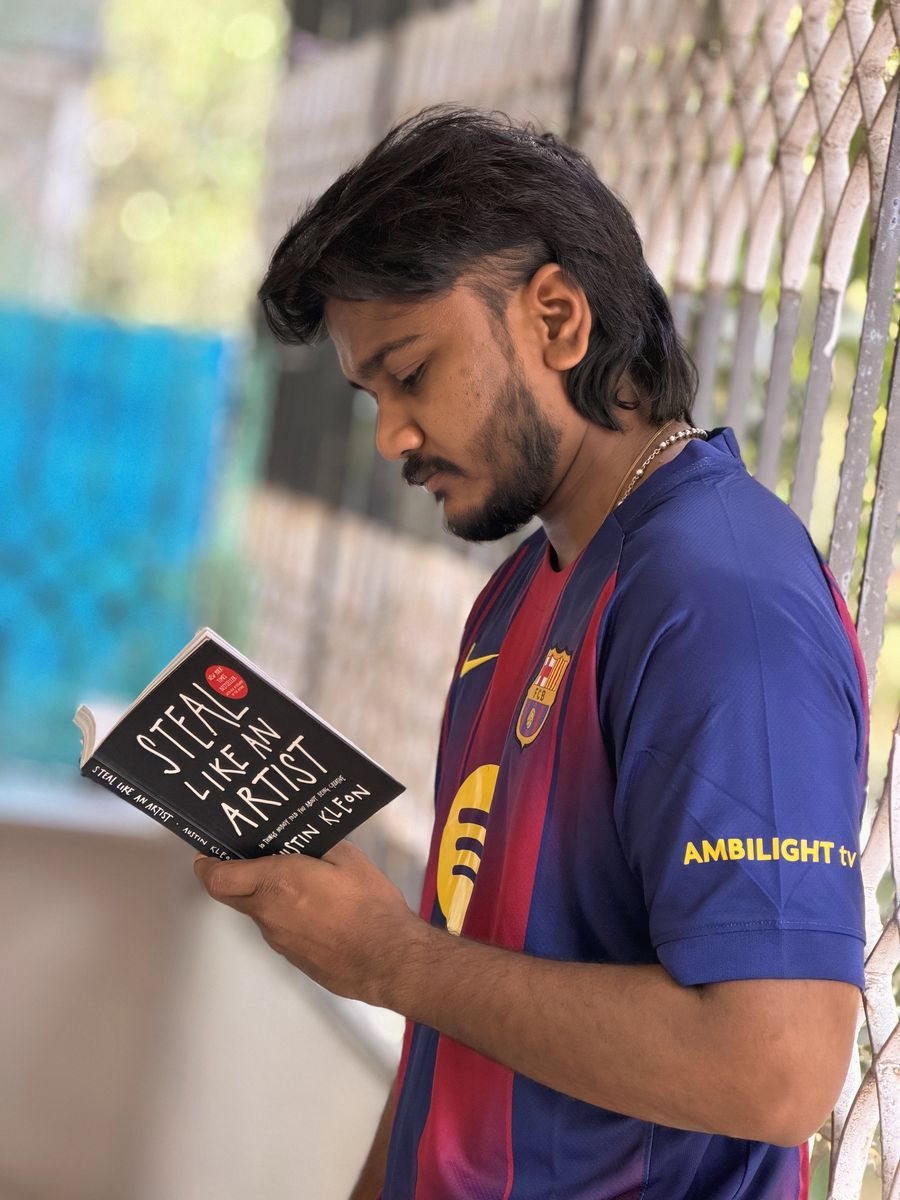
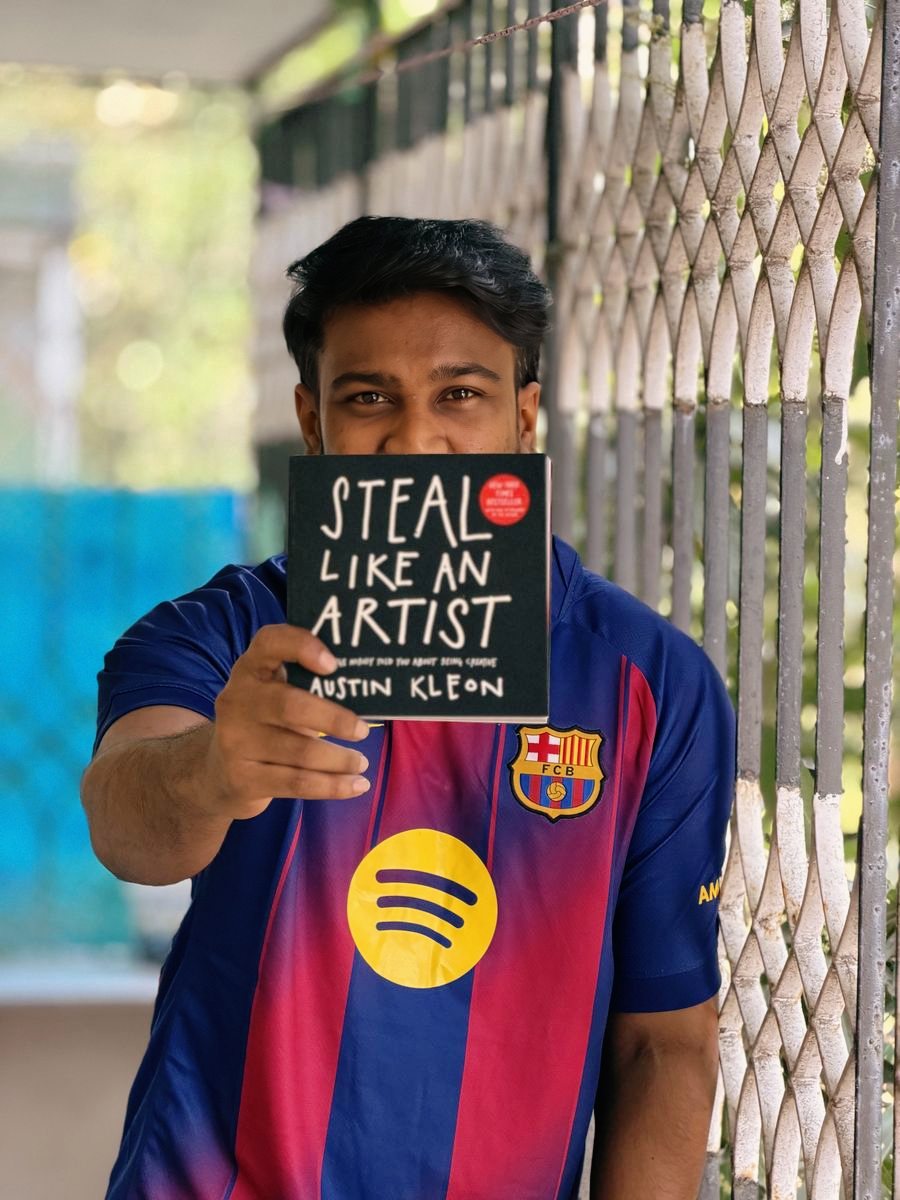
Some books arrive with a lot of noise. This one arrived quietly. It's small enough to hold in one hand, with a black cover and a title that looks like someone scribbled it in white chalk: Steal Like an Artist, by Austin Kleon.
It isn't a long read. You could finish it in an afternoon. But it's the main reason I started creating content and sharing my work, and a big part of why I'm still at it.
The permission I didn't know I needed
Like a lot of people, I used to collect far more than I shared. Songs on repeat. Frames from films I'd pause just to stare at. Posters, colours, lines from interviews. I had a quiet belief that I needed to be original before I was allowed to put anything out, and original felt like a door I didn't have the key to.
The very first chapter is called "Steal like an artist." The idea is simple: nothing comes from nowhere. Every artist is a mix of the things they love, put together in their own way. You don't begin by being original. You begin by collecting what moves you.
That one idea changed how I saw all those saved songs and screenshots. They weren't a pile of other people's work. They were a map of my taste.
Collect it, credit it, make something
Kleon draws a clear line between good theft and bad theft. Good theft studies the work, gives credit and turns it into something new. Bad theft skims, copies and pretends it was yours all along.
I love that the rule is kind. It doesn't say "never borrow". It says "borrow honestly, and add yourself". So I turned it into three small habits:
- Collect what moves you. Keep a folder, a notes app, a box, anything. If something makes you stop scrolling, it goes in.
- Credit it. If a shot is inspired by a director you love, or a beat starts from a song that changed your week, say so. Naming where it came from doesn't make your work smaller. It invites people into the conversation.
- Make something every day. Not something great. Something. A ten-second clip, a four-bar loop, a sketch in the margin of a notebook.
You don't begin by being original. You begin by collecting what moves you, and making one small thing with it every day.
Don't wait to know who you are
Another chapter title stayed with me: "Don't wait until you know who you are to get started."
I used to think I had to choose. Producer or film maker. Designer or creator. The book suggests something gentler: you find out who you are by making things, not the other way round. That's why what I share jumps between beats, films, designs and training. It's all one person following whatever he finds beautiful that week.
If you scroll far enough back through anything I've shared, you'll find the early stuff. It's rough. Some of it makes me laugh now. I'm glad it's there anyway, because it's proof that I started before I felt ready, which is exactly what the book told me to do.

What I still carry
I don't read it cover to cover any more. When I'm stuck, I open it to a random page, and it usually says exactly what I need to hear. Write the book you want to read. Use your hands. Side projects matter. Be nice, because the world is a small town.
If you've been sitting on an idea, waiting to feel ready, here's the permission this book gave me: you're allowed to start messy. Collect what you love. Say thank you to where it came from. Make one small thing today, and another one tomorrow.
Little things I noticed
- The title on the cover looks hand-written, like the book itself is a sketch.
- The shortest chapters are the ones I remember best.
- The creators I admire most talk openly about who inspired them.
- Afternoon light through a metal gate makes everything look like a film still.